
Category: Uncategorized
Completed Read
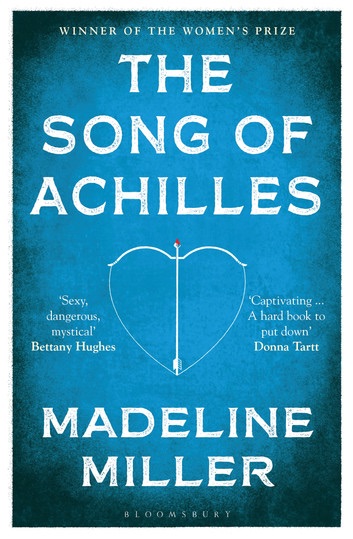
Song of Achilles by Madeline Miller
Let’s Get Concrete
I love the phrase ‘Let’s get concrete’. It’s a seamless way of going from the abstract to the applicable, the theoretical to the practical, the ethereal to the foundational (literally). It’s the build you need to truly grasp the next step to take action.
Good teachers can always take the text book and make it referential, tangible and experiential. Good teachers and leaders make things concrete.
Your Account
New functionality launched this week on Landrover.co.uk and Rangerover.com (UK market) – our new account integration.
Built as an SPA by our agency partner ITG, but integrated into our existing UK brand websites, this functionality allows a user to create an account, save configurations and then manage their marketing preferences.
This is the first time we’ve built a fully integrated offering into our Adobe Experience Manager platform with Forgerock in place as our IAM solution and connections into our CRM APIs.
Well done to my team for delivering this MVP.


Apt for the Week
There’s always a West Wing angle on current events, here’s a couple based on the tariff and trade debate.
Free trade stops wars, and we figure out the rest. I believe that, but it’s the nuance of ‘figuring out the rest’ which causes the angst, but that angst is the preferable position.
Differentiation, Relevance, Sustainability
I like Scott Galloway’s model to analyse a business..
- Is it differentiated – does it offer value (actual or perceived) over and above similar products / services. What makes it stand out?
- Is it relevant – is it desirable but also attainable by enough customers for the business to be viable? Ferraris are only attainable by a tiny percentage of consumers but it is significantly differentiated and therefore is profitable.
- Is it sustainable – is the business model, and to a certain extent the balance between differentiation and relevance, stable or improving to ensure it can be maintained.
This can also apply to personal working styles, ideas, ways of working, organisational structures.
Am I different, am I accessible, am I authentic.
A Plan
A Labour victory in the GE is now inevitable. Ironically Britain will shift to the left when other major European countries are taking steps to the right.
This is about competency as opposed to ideology. In my view voters value competence above ideology , especially when deciding on the merits of parties clustered around the centre ground. The Tory brand is now synonymous with incompetence and chaos, even if you don’t want a Labour government you want a competent government.
The same can be said in business, I prefer working for people who have a plan. Whether or not I agree with the plan is a secondary question, having a plan always beat not having any plan.
It harks back to one of my guiding principles, action always trumps inaction. Competence to move us in a direction, is better than incompetence failing to move us in any direction.
Simplification
One of the most powerful qualities is the ability to simplify; simplify the complex, simplify the hard, simplify the long-term.
That applies in a number of ways; how you think, how you communicate, how you plan, how you act.
Having a crowded diary is great and makes you feel wanted and value add, but is it efficient, is it efficient and simple?
Does creating 30 slides add value or does it just to cement the position that the project / initiative is too complex to deliver?
Do I need to create a word salad for each answer to a question?
Is what I’m doing right now adding value today or in the next six months? The simple equation of time spent and personal value added.
I remember being coached that the best presentations last for 20 minutes and have 10 slides and if you’re given a time slot under 20 minutes then remove a slide for every two minutes underneath. Tha approach drives brevity and construct in the message but it also ensures you literally have to ‘present’ the material as opposed to just read each point on the slide.
I also never say “this is a really complex area, so I’ve simplified it for you”, that leaves the audience suspecting you’ve left things out which they would like to see and you’re patronising them.
Go in a different direction by saying “Here’s some core principles we can all agree on”, because Simplification is vital, but people don’t want to be told they need to simplify, they like to think they can handle the complex, they can understand networks.
Realising you need to simplify for yourself, but also simplify for others will payoff in many areas.
Man Like Marcus
“You have power over your mind – not outside events. Realize this, and you will find strength.” – Marcus Aurelius
Shanghai Auto Show, A Broader View
This year’s Shanghai Auto Show has widely been covered as a seminal moment for the Chinese auto-industry. Demonstrating the vibrancy and innovation of Chinese companies and cementing the position of that largest players as auto powerhouses, powerhouses focused on both the domestic and international market.
At the heart of this new world order is the Chinese economy’s dominance of EV battery component and manufacturing industry. As China rules the roost in terms of battery manufacture it therefore has an inherent advantage as the auto-industry moves over the tipping point from ICE to BEV.
Beneath that competitive advantage lies a more complex story of how China’s economy is effective at resource mobilisation. Where China is Beating the World explores electric vehicles, high speed rail and solar power as three prime examples of how China has subsidised, accepted short-term ineffciency and enabled agile industrial planning to achieve eye-watering growth compared to other countries.
Theodore Roosevelt – A President for the Ages
When it comes to the discussion of great American presidents, one name that stands out prominently is that of Theodore Roosevelt. Serving as the 26th President of the United States from 1901 to 1909, Roosevelt’s impact on the nation and his lasting legacy make a strong case for his greatness as a leader. While opinions may differ on certain aspects of his presidency, there is no denying that Roosevelt’s progressive policies, his commitment to conservation, and his assertive foreign policy have left an indelible mark on American history.
One of the key reasons Theodore Roosevelt is widely regarded as a good president is his progressive agenda. During his tenure, he championed reforms that sought to address the excesses of industrialization and promote fairness in society. Roosevelt pursued antitrust litigation against powerful corporations, breaking up monopolies and advocating for a level playing field for businesses. His efforts laid the groundwork for subsequent regulations that curbed the influence of large corporations, protecting consumers and fostering competition.
Moreover, Roosevelt’s commitment to the conservation of natural resources was visionary and ahead of his time. He understood the importance of preserving America’s natural beauty for future generations. Under his leadership, Roosevelt established national parks, wildlife refuges, and national forests, effectively doubling the amount of protected land in the United States. His passion for conservation set a precedent for environmental stewardship, a legacy that continues to inspire environmental movements to this day.
Roosevelt’s foreign policy also distinguishes him as a great president. He believed in projecting American power and influence beyond its borders, pursuing a robust international presence. Roosevelt mediated the end of the Russo-Japanese War, earning him the Nobel Peace Prize and establishing the United States as a global mediator. He asserted American dominance in the Western Hemisphere with the Roosevelt Corollary, which warned against European intervention in the Americas. By asserting American power and interests, Roosevelt laid the groundwork for the United States’ emergence as a global superpower.
Of course, like any leader, Roosevelt had his shortcomings. Critics argue that his aggressive foreign policy was too interventionist, often disregarding the sovereignty of other nations. Additionally, his stance on civil rights and racial equality fell short of modern standards. Roosevelt’s controversial decisions, such as the dismissal of African-American soldiers from the military, tarnish his otherwise exemplary record. It is important to acknowledge and critique these shortcomings, as they form part of his overall presidential legacy.
In the final analysis, Theodore Roosevelt’s impact as a president cannot be understated. His progressive agenda, commitment to conservation, and assertive foreign policy have left an enduring imprint on American history. While his presidency was not without flaws, his accomplishments far outweigh any missteps. Roosevelt’s legacy continues to shape the United States, inspiring leaders to prioritize the welfare of the American people, the conservation of natural resources, and the pursuit of a strong and influential global presence. It is for these reasons that Theodore Roosevelt is undoubtedly considered a good president, whose contributions continue to resonate with Americans to this day.
 Pete Norwood